
The short answer
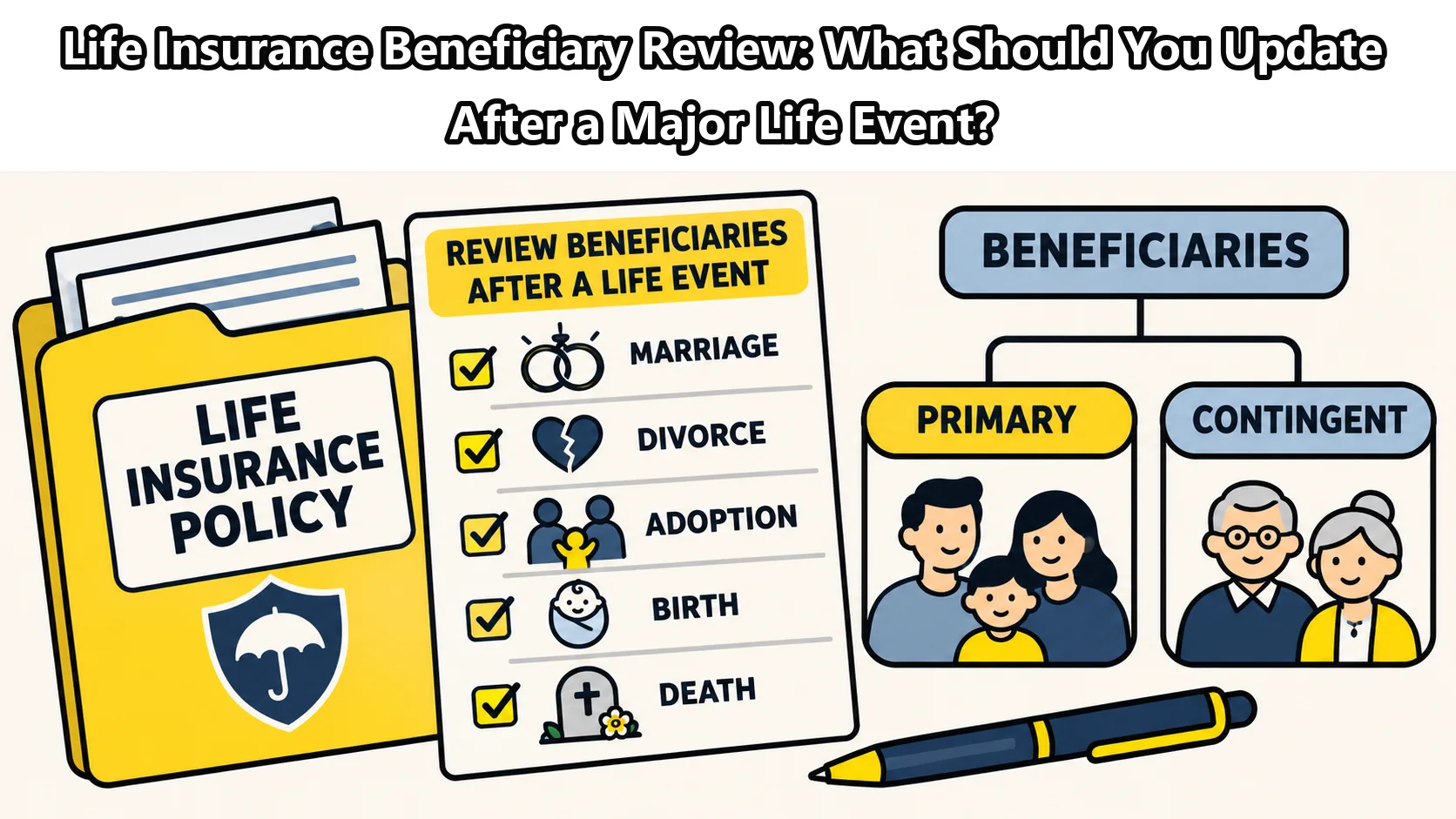
Review a life insurance beneficiary designation after marriage, divorce, remarriage, birth, adoption, death, a major job change or another change in the people who depend on the policy. NAIC advises policy owners to review beneficiaries and update them through the insurer’s formal written process in most situations. The policy owner, not a general information site, must confirm who has the right to make a change.
Start with the current policy, owner, insured person, primary beneficiaries, contingent beneficiaries, percentages, contact details, policy number, benefit amount and any assignment or trust document. Compare the designation with the purpose of the coverage. Do not assume that a will, divorce decree, household relationship or an informal promise automatically changes the beneficiary form.
Owner, insured and beneficiary are different roles
The insured is the person whose life is covered. The policy owner controls certain policy rights, including beneficiary changes when the contract permits. The beneficiary is the person or organization designated to receive the death benefit. One person can hold more than one role, but the roles should be recorded separately.
Check the policy declarations, application, assignment records and insurer correspondence. If ownership was transferred, pledged, assigned to a trust or connected to an employer plan, ask the insurer which person or entity can submit a change. Do not sign a new form until the insurer confirms the correct owner and process.
Primary and contingent beneficiaries
A primary beneficiary is the first designation expected to receive proceeds if the policy pays. A contingent or secondary beneficiary is generally considered if the primary designation does not apply. NAIC advises specifying percentages or equal shares when more than one person is listed so the insurer can interpret the intended distribution.
Review whether the percentages total the required amount, whether each person’s legal name and contact information are current and whether the designation uses a class such as children or descendants. Ask the insurer how its form treats a beneficiary who dies before the insured and whether per stirpes, per capita or another wording is available. If the designation uses equal shares, confirm how the insurer handles a missing address, a name change or a beneficiary who cannot be located.
Marriage and remarriage
Marriage can change the financial purpose of a policy, household obligations, income replacement needs and the people who should receive notice. A new spouse is not automatically the beneficiary unless the policy, plan or completed designation says so. An existing former spouse or another relative may remain listed if the form was never changed.
Compare the designation with any prenup, postnup, trust, loan covenant or employer-benefit rule that applies. Ask the insurer or qualified adviser about required consent and documentation. Keep the submitted form and confirmation; a conversation about intent is not the same as an accepted beneficiary change.
Divorce and former spouses
Divorce can affect the policy owner, insured, premium responsibility, property settlement and beneficiary designation. The legal effect of divorce on a beneficiary can vary by state, policy type and wording. Do not assume a divorce automatically removes a former spouse or automatically preserves the designation.
Read the decree and policy together and ask the insurer, state regulator or qualified family-law professional what must be filed. If the coverage secures a support obligation, changing the designation without understanding the obligation can create a conflict. Record who owns the policy, who pays the premium and who must receive notice.
Birth, adoption and minor children
A birth or adoption can change the people the policy is intended to protect. NAIC recommends updating beneficiaries after life events and notes that insurers generally do not pay benefits directly to minors in the same way as to an adult. A parent may need to consider a trust, custodian or another legally appropriate arrangement.
Do not write an informal label such as “my children” without asking how the insurer’s form defines the class. Confirm names, dates, relationship and any trust or custodial instrument with a qualified professional. A beneficiary designation is not a substitute for an estate plan and does not decide custody or guardianship.
Death of a beneficiary
If a beneficiary dies, the designation may no longer operate as expected. The insurer may ask for a death certificate, a new form or proof of the surviving beneficiaries. A contingent designation can become important, but its effect depends on the wording and the order of deaths.
Update the policy after the insurer confirms the current status. Keep the death certificate and correspondence in a secure file. Do not assume that a beneficiary’s family automatically receives the share or that the proceeds pass exactly as a will would direct.
Percentages, equal shares and class designations
Multiple beneficiaries require clear allocation. A form may accept percentages, equal shares or a class designation. The insurer’s form and policy define the available choices. A handwritten instruction, a percentage that does not total correctly or an outdated address can delay review or create ambiguity.
Ask the insurer to explain its form before signing. If the purpose is to treat future children, descendants or a trust in a particular way, obtain legal advice instead of assuming an ordinary form creates that result. Store a final accepted copy, not only an unsigned draft. A clean copy with the insurer’s acceptance date is easier for future reviewers to rely on than a folder of incomplete drafts.
Irrevocable beneficiaries and assignments
Some designations can be irrevocable or subject to another person’s consent. A policy can also be assigned as collateral or transferred to a trust or business. These arrangements may limit the owner’s ability to change beneficiaries or policy terms without additional signatures.
Look for assignment notices, trust documents, divorce orders, employer plan rules and lender paperwork. Ask the insurer which document controls and who must approve a change. Do not submit a new beneficiary form that contradicts an assignment without first resolving the conflict.
Employer and group life insurance
Employer-sponsored life insurance may use a separate beneficiary portal, plan administrator and form. A personal policy and group policy can have different primary and contingent beneficiaries, definitions, conversion rights and evidence requirements.
Keep the benefits statement, summary plan description, enrollment confirmation, beneficiary form and administrator contact. Ask what happens after leaving employment, reducing coverage or converting group insurance. Do not assume a beneficiary update on a personal policy changes the employer plan. If the employer changes its administrator or carrier, download the current statement and confirm that the designation was carried forward.
What beneficiaries should be able to find
NAIC’s recent consumer guidance says a beneficiary should know the insurer, policy number, benefit amount and where the policy is stored. A policy owner can reduce delay by sharing this information with beneficiaries or a trusted adviser without exposing passwords or unnecessary identity records.
Create a secure policy index with insurer name, policy number, owner, insured person, benefit amount, premium status, agent or service contact, storage location and the date last reviewed. Keep the index current after a carrier merger, name change, address change or policy replacement. Tell a trusted person how to find the index, but never store account passwords, one-time codes or unnecessary identity numbers beside it.
Policy reviews and coverage purpose
A beneficiary review should accompany a coverage review. NAIC’s buyer’s guide recommends reviewing life insurance after events such as birth, adoption, marriage, job change, death or divorce. The right benefit amount and policy type depend on continuing financial needs such as income, debts, education, care or final obligations.
Ask whether the policy still serves its original purpose, whether premiums and benefits changed, whether a term period is ending and whether a cash-value policy has loans, riders or illustrations that need separate review. Do not make a replacement decision solely to change a beneficiary. If the policy was bought to replace income, fund education, protect a mortgage or support a dependent, write that purpose next to the current designation so a reviewer can see whether the people and amounts still fit.
Tax, estate and family-law questions
Beneficiary choices can interact with estate documents, trusts, support obligations, taxes and family-law orders. The insurance company can explain its administrative form, but it does not replace an attorney, tax professional or financial adviser who understands the household’s facts and jurisdiction.
Write down the question, document, date and professional who answers it. Avoid copying a designation from a friend or an online template. A simple-looking change can have a different result if the beneficiary is a minor, a trust, a business, an estate or a person receiving means-tested benefits. Keep the professional advice with the policy file and note which jurisdiction and documents were reviewed; a general internet explanation cannot replace that context.
A neutral beneficiary worksheet
Use columns for policy, owner, insured, policy type, benefit amount, primary beneficiary, contingent beneficiary, percentage, class wording, contact, irrevocable status, assignment, last confirmed date and open question. Add separate rows for group and individual coverage.
Mark whether the answer comes from the current policy, accepted beneficiary form, plan administrator, trust, court order or professional advice. Keep the worksheet private and do not send Social Security numbers, bank details or passwords to an insurance information site.
Questions before submitting a change
Ask: Who is the current owner? Is the designation revocable? Are beneficiaries listed by legal name? Do percentages or equal shares work on this form? What happens if a beneficiary dies first? Is consent required? Is there an assignment or trust? Does the employer plan use a separate process? When does the change become effective?
Request an acceptance confirmation and keep the submitted form. If the insurer rejects or questions the request, ask for the reason and correction route. Do not treat a saved web form or an email draft as an accepted designation.
After a death or policy claim
A beneficiary may need the insurer’s name, policy number, death certificate, claim form and proof of identity. NAIC’s policy locator may help find policies when the company or policy information is missing, but a search result does not decide eligibility or claim payment. Keep copies.
Contact the insurer through a verified channel, ask about settlement options and consult a tax professional about possible consequences. Keep claim forms, notices, payment choices and correspondence together. Never pay a stranger for access to a policy record or share account credentials. If more than one policy, beneficiary or estate representative is involved, list the claim numbers separately and ask the insurer how documents should be submitted so the records do not become mixed.
Final checklist
After a major life event, locate every policy; identify owner and insured; read primary and contingent designations; verify names, percentages and contact details; check assignments, trusts, employer plans and court orders; ask whether consent is required; submit the insurer’s formal form; save acceptance; and tell trusted beneficiaries where the policy information is stored.
Review at least periodically and after birth, adoption, marriage, remarriage, divorce, death, job change, new debt or a change in dependents. Insurance Radar explains the questions; the policy, insurer, state rules and qualified legal, tax or financial professionals determine the effect of a designation. Do not assume an old form still expresses today’s intent. Keep the review date with the policy file and repeat it when any beneficiary reports a name, address or family change.
Sources and further reading
- Consumer insurance information — National Association of Insurance Commissioners; checked 2026-10-12.