
The short answer
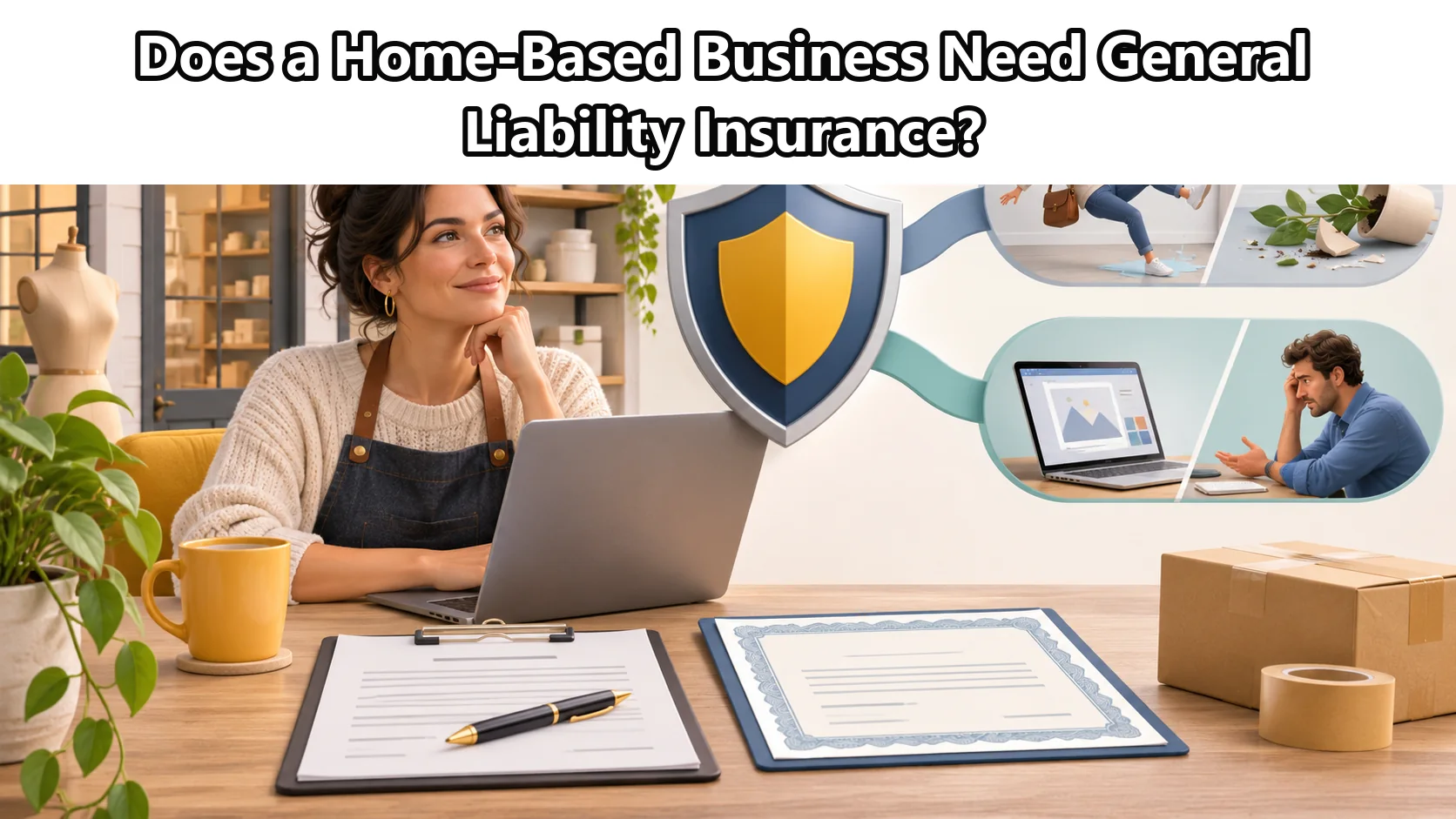
Being small, solo, or home-based does not automatically remove business liability risk. A client, visitor, delivery person, customer, landlord, vendor, or other third party can allege bodily injury, property damage, advertising injury, or another loss connected with the business. Whether general liability insurance is appropriate depends on the work, location, contracts, products, people, assets, vehicle use, professional advice, state rules, and the policy’s exclusions and limits.
General liability and professional liability solve different problems. General liability is commonly associated with third-party bodily injury, property damage, and certain personal or advertising injury allegations. Professional liability, often called errors and omissions or E&O, addresses claims that professional services, advice, design, or work product caused a client’s financial loss. A home-based consultant may need a different combination from a craft seller, repair contractor, tutor, designer, or online retailer. Start with the actual operations, not the business size.
Why a tiny business can still face a large exposure
A company does not need employees, a storefront, or high revenue to interact with other people’s property, data, money, or expectations. You may visit a client, invite a customer to a workspace, ship a product, use a borrowed venue, install something, give advice, or sign a contract that allocates risk. A single allegation can create defense costs even when the business believes it did nothing wrong.
Revenue is therefore not a complete measure of exposure. Ask where the work happens, who can be injured, what can be damaged, what products are sold, what promises are made, and which activities are performed by subcontractors. A low-revenue side business may have a narrow exposure, but it may also have a difficult combination of product, premises, completed-operations, professional, cyber, or vehicle risks.
General liability and professional liability are not interchangeable
General liability commonly responds to covered third-party allegations involving bodily injury, property damage, and certain personal or advertising injury. Examples can include a visitor slipping at a business location, accidental damage to a customer’s property, or a product-related allegation, subject to the policy form, exclusions, limits, and facts. It is not a universal promise to pay every business dispute.
Professional liability focuses on the service or advice itself. A client may allege that a consultant, designer, accountant, technology provider, therapist, engineer, or other professional made an error, missed a deadline, or failed to perform as promised and caused financial harm. A general liability policy may not replace E&O, and E&O may not replace premises, product, or bodily-injury coverage. Ask the agent to map each operation to the policy that is intended to address it.
Do not assume a homeowners policy covers the business
A homeowners or renters policy may cover personal property and personal liability, but a business conducted at home can be limited, excluded, or subject to a separate endorsement or product. Business equipment, inventory, visitors, client property, commercial deliveries, professional services, and product liability may not receive the treatment the owner expects.
Read the personal policy’s business exclusions and ask the carrier what, if anything, is available for the home activity. A home-business endorsement or specialty home-business policy may address some exposures, but it may have its own eligibility rules, sublimits, and exclusions. Do not place business receipts, equipment, or client commitments in a personal coverage assumption without written confirmation.
When a BOP may be part of the conversation
A business owners policy, or BOP, commonly packages property and liability features for eligible small businesses. It may be considered when the business has equipment, inventory, a location, or a predictable class of operations. It is not automatically available to every home-based or unusual business, and it does not remove the need to check professional, cyber, auto, workers’ compensation, or other separate exposures.
Ask which property, liability, business-income, equipment, and endorsement features are actually included. Confirm whether the policy is written for the correct entity, location, operations, and revenue basis. A package label is not enough; the declarations, forms, endorsements, definitions, exclusions, deductibles, and limits determine the protection.
Contracts may require insurance even when the law does not
A client, landlord, marketplace, event organizer, lender, general contractor, or vendor may require proof of insurance as a contract condition. That requirement does not by itself tell you which coverage is appropriate or whether the requested limit matches the actual risk. It may also ask for a certificate holder, additional insured status, waiver of subrogation, primary and noncontributory wording, or a particular endorsement.
A certificate of insurance is evidence of stated insurance information; it generally does not rewrite the policy or create coverage that the policy does not provide. Ask the broker to compare the contract with the policy and endorsement forms. Do not issue a certificate for an operation, location, limit, or additional insured request that has not been reviewed and accepted by the responsible insurer.
Classify every operation honestly
Underwriting depends on what the business actually does. “Consulting,” “retail,” “landscaping,” “installation,” “design,” “manufacturing,” “food sales,” “child care,” and “technology services” can trigger different questions and exclusions. Combining unrelated activities under a vague label can create a mismatch between the application and the policy.
List each service, product, location, delivery method, customer type, subcontractor role, annual revenue basis, and percentage of activity. Explain new services before starting them. If the business sells a product and also gives professional advice, ask whether the policy treats those as separate exposures and whether an endorsement or separate policy is needed.
Products and completed operations can change the analysis
A business may have exposure after a job is finished or after a product leaves its possession. A contractor’s installation, a repair, a design specification, a packaged product, or a food item can create a claim long after the transaction. General liability forms may contain products-completed-operations coverage, but the wording, limits, territory, exclusions, and classification matter.
Ask whether the policy covers the actual products and completed work, whether a recall or product defect issue is treated differently, and whether the business’s own property is excluded. Keep supplier records, contracts, instructions, quality checks, delivery records, and incident documentation. These records do not create coverage, but they can help explain what happened and who controlled each part of the risk.
Home-based work has premises, visitors, and property questions
A home-based operation may involve customers, contractors, couriers, employees, inventory, tools, computers, signage, or a dedicated workspace. A landlord, condominium association, mortgage lender, or local rule may impose requirements. The location can also matter if work occurs at a client’s property, a shared office, a market, or a rented event space.
Describe all locations to the agent and ask where the policy applies. Ask about business personal property, customer property in your care, custody, or control, temporary locations, property in transit, and events away from home. A policy written for a home office may not automatically follow goods, tools, or people to every job site.
Employees, subcontractors, and vehicles create separate questions
Hiring a worker, using a subcontractor, or sending someone to a customer site can change the risk and the insurance requirements. Workers’ compensation rules are state-specific and can apply differently to employees, owners, and contractors. A general liability policy is not a substitute for workers’ compensation, employment practices, or occupational coverage.
Business use of a personal vehicle, delivery vehicle, rented equipment, or a vehicle owned by the business may require commercial auto or another endorsement. Ask who owns, drives, hires, and controls each vehicle or worker. Obtain certificates when appropriate, but verify the underlying relationship and contract rather than assuming a certificate alone transfers responsibility.
Cyber and professional risk may be more important than premises risk
A home-based digital business may have little visitor traffic but handle client files, payment information, credentials, health information, or confidential designs. A data incident, ransomware event, privacy allegation, or service interruption can fall outside ordinary general liability. The business may need to discuss cyber coverage, technology errors and omissions, crime, or a contractual incident-response obligation.
Likewise, a service business can face a financial-loss allegation even when no one was physically injured and no property was damaged. Ask whether the main exposure is a professional mistake, a failure to deliver, a security incident, a product defect, or a premises accident. The answer should drive the coverage map.
Limits, deductibles, and policy triggers matter
A quote is not meaningful without its limits, deductibles, aggregate, per-occurrence amount, sublimits, exclusions, defense treatment, territory, and policy period. A client contract may ask for a limit that is higher than the business needs for one exposure but lower than the business’s total combined risk. Umbrella or excess liability may be discussed when underlying limits and eligibility support it.
Professional liability may be written on a claims-made basis, which can involve a retroactive date and an extended reporting or tail question. General liability is often discussed with occurrence wording, but the actual form controls. Ask what event triggers coverage, when notice is required, what happens after cancellation, and whether a new policy leaves a gap.
Applications and records should match reality
Complete applications carefully and retain a copy of the answers, submissions, quote, forms, endorsements, payment records, and communications. Understating revenue, omitting a service, or describing a business as “office only” when it also installs, manufactures, delivers, or sees customers can create a coverage dispute later.
Tell the insurer or broker about material changes before renewal when possible: new location, new product, new employee, new vehicle, larger contract, work in another state, a claim, or a change in professional services. An updated application is not a guarantee of acceptance, but it gives underwriting a chance to address the changed exposure.
Compare quotes by coverage, not only price
For a small business, the cheapest premium may have a narrower class, lower sublimits, higher deductible, broader exclusion, claims-made trigger, or missing endorsement. Compare the named insured, operations, locations, limits, aggregate, deductible, forms, exclusions, property basis, business income, professional liability, cyber options, and certificate service.
Ask whether the quote comes from an admitted carrier, a surplus-lines market, a program administrator, or another arrangement, and ask who actually issues the policy. Availability, licensing, forms, taxes, fees, and state rules can vary. A licensed commercial agent or broker can help translate a contract and operations list, but the business owner still needs to read the final documents.
A practical checklist before buying
Write down what the business does, where it works, who it serves, what it sells, what it owns, who visits, what it stores, what it transports, what advice it gives, and which contracts it signs. Add employees, subcontractors, vehicles, professional credentials, data, products, events, and expected changes.
Then ask: Which allegations should general liability address? Which require professional liability? Does the home policy exclude the activity? Is a BOP eligible? Are products and completed operations included? Are customer property and temporary locations addressed? What workers’ compensation, auto, cyber, crime, or umbrella questions remain? What certificate or additional-insured wording is required?
Final checklist
A small or home-based business should not buy a label and assume it is protected. Confirm the legal entity, named insured, operations, locations, limits, deductibles, policy trigger, exclusions, endorsements, contracts, certificates, claims process, renewal duties, and material-change reporting. Keep the final policy and evidence where the owner can find them.
General liability may be a useful part of the plan, but it is not a universal substitute for professional liability, workers’ compensation, commercial auto, cyber, property, or other coverage. The most useful question is not “Am I too small to be sued?” It is “What could a customer, visitor, client, worker, landlord, vendor, or regulator allege about the work I actually do, and which policy form is intended to respond?”
Questions to resolve before acting
Write the missing fact, the responsible contact and the next deadline before choosing a response.
Sources and further reading
- SBA business insurance guide — U.S. Small Business Administration.
- Small Business Insurance Basics — Insurance Information Institute.
- Commercial insurance types of policies — Insurance Information Institute.
- The Hartford Small Business Insurance — The Hartford; checked 2026-10-14.
- Home Based Business — RLI; checked 2026-10-15.